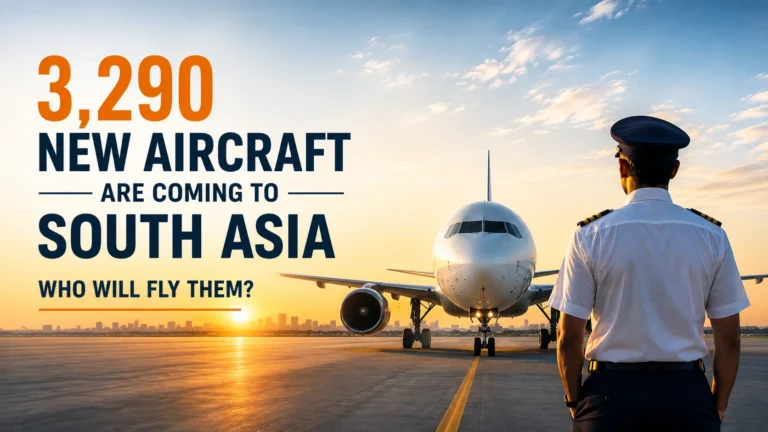
3,290 New Aircraft Are Coming to South Asia — Who Will Fly Them?
By Shravya, Aviate Aero Academy
Every aircraft order sounds impressive on paper. New routes, new fleets, new airport hubs, stronger connectivity, bigger airlines, more international flying — it all points to one thing: South Asia is moving into a much larger aviation future.
Boeing’s latest Commercial Market Outlook projects that India and South Asian airlines will need nearly 3,300 new airplanes by 2044, with passenger air traffic in the region expected to grow at an average of 7% annually over the next two decades. The same outlook projects the region’s fleet to grow from 795 to 2,925 airplanes, with single-aisle aircraft making up nearly 90% of future deliveries.
That is a massive opportunity.
But opportunity alone does not create pilots.
The real question is much sharper: who will be ready to fly these aircraft?
This is the part many students and parents miss. When they read about aircraft orders and aviation growth, they see a dream becoming possible. That is understandable. Aviation is aspirational. The uniform carries pride. The cockpit represents achievement. For many families, a child becoming a pilot is not just a career milestone; it is a generational dream.
But behind every pilot sitting in a cockpit, there is a long and disciplined process that begins years before the first airline job.
Aviation growth creates demand, but training creates readiness.
Boeing’s outlook also says India and South Asia may need around 141,000 new aviation professionals over the next two decades, including about 45,000 pilots, 45,000 technicians, and 51,000 cabin crew. (Boeing) That number should excite aviation aspirants, but it should also wake them up.
Because the industry will not need only people who dream of aviation. It will need people who are properly trained, medically fit, technically strong, disciplined, and professionally prepared.
A pilot career does not begin when an airline opens hiring. It begins much earlier — when a student understands the roadmap clearly.
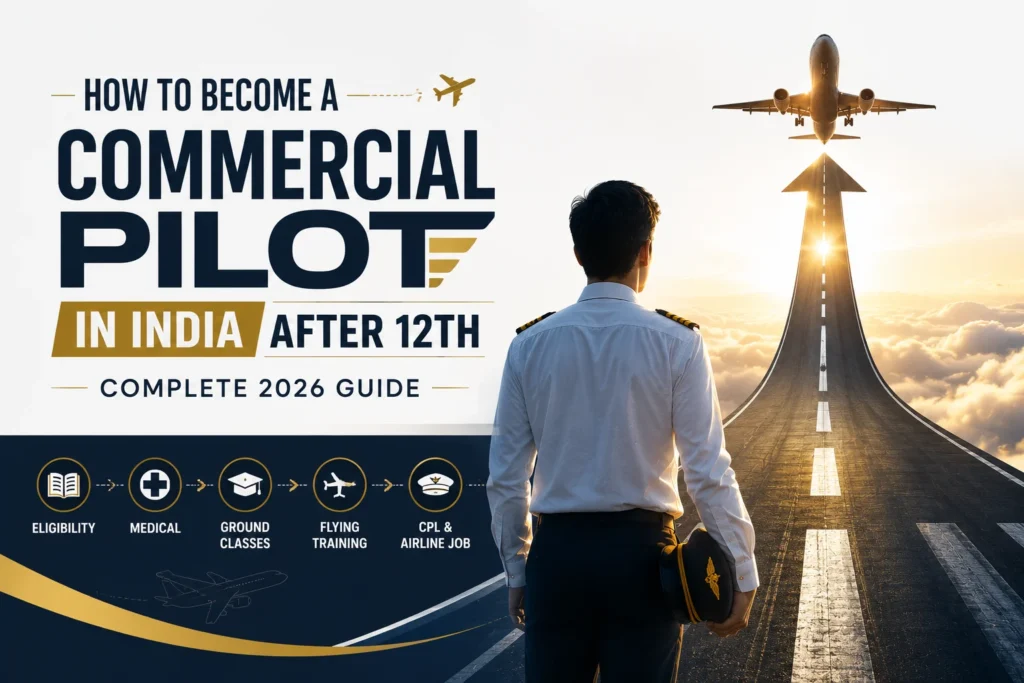
The first stage is clarity. Can the student meet the eligibility requirements? Is the student medically fit? Does the family understand the cost involved? Does the student know the DGCA exam pathway? Has the student understood what CPL training actually demands? Has the flying school been selected carefully? Is there a plan for type rating and airline preparation later?
These are not small details. These are the foundation.
Too many aspirants start with excitement and then get stuck in confusion. Some underestimate DGCA ground subjects. Some choose flying schools based only on price. Some do not understand the difference between training in India and abroad. Some begin without checking medical fitness properly. Some parents assume pilot training is one single course, when in reality it is a staged journey involving exams, flying hours, licensing, documentation, skill-building, and long-term planning.
That lack of clarity can become expensive.
Pilot training is not a field where guesswork should guide decisions. A wrong choice can delay timelines, increase cost, or damage confidence. This is why the coming aviation boom should not be treated like a shortcut to success. It should be treated like a serious call for preparation.
If nearly 3,300 aircraft are expected to enter the region, then airlines will need more than licence holders. They will need cockpit-ready professionals.
That difference matters.
A licence proves that a student has completed required training. Readiness proves that the student can carry responsibility.
A future-ready pilot needs strong DGCA subject knowledge, but also decision-making ability. They need flying hours, but also cockpit discipline. They need confidence, but not overconfidence. They need communication skills, situational awareness, respect for safety, and the maturity to work in high-pressure environments.
Modern aviation is not only about controlling an aircraft. It is about operating inside a system where every decision affects passengers, crew, aircraft, airline operations, and safety.
That is why the quality of preparation matters as much as the demand in the market.
At Aviate Aero Academy, we often meet students who are passionate but unsure. They know they want to become pilots, but they do not know where to begin. As a Hyderabad-based aviation training and guidance academy, Aviate Aero Academy supports aspiring pilots through DGCA ground classes, CPL guidance, flying training assistance, type rating guidance, and global flying school guidance. Our focus is to help students and parents move from confusion to clarity, so the pilot journey begins with a proper roadmap instead of random decisions.
This is especially important now because India and South Asia’s aviation growth will create more visibility around pilot careers. More students will enter the space. More parents will explore training options. More institutes will market aviation dreams. But serious aspirants must learn to separate inspiration from information.
Do not choose a flying school because the brochure looks good.
Do not start DGCA preparation casually.
Do not ignore medical fitness.
Do not assume every international training route is automatically better.
Do not think airline hiring will wait for you.
The aviation industry rewards prepared candidates. It does not reward confusion.
For students, the message is simple: if you want to be part of this aviation future, start preparing like a professional before you become one. Learn the pathway. Ask the right questions. Build your academic foundation. Understand costs and timelines. Take DGCA subjects seriously. Choose guidance over guesswork.
For parents, the message is equally important: support the dream, but demand clarity. Pilot training is a serious investment. Before committing money, understand the complete roadmap.
South Asia may need thousands of new aircraft. The region may need tens of thousands of aviation professionals. The opportunity is real, and it is large. But the cockpit will not belong to everyone who reads these headlines and feels inspired.
It will belong to those who prepare early.
It will belong to those who respect the process.
It will belong to those who understand that becoming a pilot is not just about flying an aircraft; it is about becoming worthy of the responsibility that comes with it.
The aircraft may be coming.
Now the real question is: who is preparing to fly them?