
Ground Classes, Medicals and Computer Number: Planning Your CPL Journey with Aviate Aero Academy
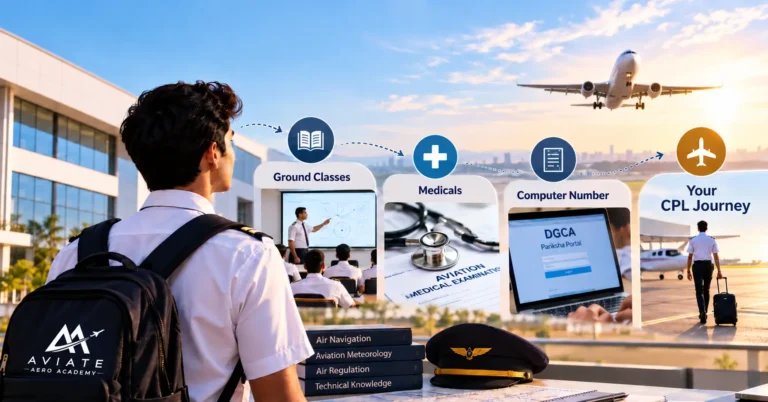
By Shravya, Aviate Aero Academy
For many aspiring pilots, the first challenge is understanding where to begin.
One conversation focuses on DGCA examinations. Another mentions medical assessments. Someone advises applying for a Computer Number, while a flying school asks about documents and training plans. Students and parents can quickly find themselves collecting information without understanding how it fits together.
A Commercial Pilot Licence journey involves several connected stages, each serving a different purpose. Knowing those differences helps families plan their time, assess expenses and avoid treating admission to a course as confirmation of eligibility for an entire career.
At Aviate Aero Academy, the purpose of CPL guidance is to help students understand that wider pathway alongside their ground-class preparation.
Ground Classes Build the Theoretical Foundation
Ground classes develop the knowledge students need for their pilot examinations and subsequent training.
Subjects such as Air Navigation, Aviation Meteorology, Air Regulation and technical knowledge introduce concepts that matter beyond an examination paper. Understanding weather, interpreting navigation problems and learning aircraft principles are foundations students will continue building on during flying training.
Aviate Aero Academy offers structured DGCA ground classes in Hyderabad, with instructor-led preparation forming part of its training approach.
However, attending classes, completing a syllabus and passing examinations are separate milestones. Students need regular revision, question practice and time to address gaps in understanding.
Ground-class admission also does not provide a medical clearance, a pilot licence or an airline employment commitment.
Medical Planning Deserves Early Attention
Medical suitability should be considered early, particularly before making substantial commitments to flying training.
Aviation medical examinations follow a specific regulatory process. Students should understand the Class 2 and Class 1 stages relevant to their pathway, consult appropriately authorised examiners and follow current DGCA instructions. DGCA maintains medical requirements and examiner information through its official resources.
For families, the practical point is straightforward: an academy can explain the process and help students identify the next action, but it cannot determine medical fitness or promise a favourable outcome.
Aviate’s medical guidance should therefore be understood as assistance with navigating the pathway. Examinations, investigations, assessments and any further medical review remain with the relevant professionals and authorities.
Students should also budget separately for medical appointments, tests, travel and any additional investigations required.
The Computer Number Serves a Different Purpose
A Computer Number identifies a candidate within DGCA’s examination system. It is not a medical certificate, a training qualification or a pilot licence.
DGCA has introduced automatic generation of Computer Numbers for eligible flight crew applicants following successful online application submission through Pariksha. Students should follow the current portal instructions rather than rely on older application advice.
Accurate personal information and the required educational documents remain important. Students should check that their records are consistent and understand any eligibility or documentation requirements before applying.
Aviate can guide students through understanding the Computer Number process. Issuance remains part of DGCA’s system, rather than an approval granted by the academy.
Plan These Stages Together
Students often look for one fixed sequence that applies to everyone. In practice, planning depends on educational readiness, documentation, medical progress and examination opportunities.
Some preparation can move forward alongside other steps. What matters is identifying dependencies before making bookings or paying significant fees.
A useful counselling conversation should establish:
- Which educational documents need checking.
- What medical action should be taken next.
- Whether the Computer Number application is ready.
- How ground classes fit the intended examination plan.
- When flying school selection and budgeting should begin.
For parents, this creates a clearer picture of progress than a single promised completion date.
Understand Aviate’s Guidance and Separate Expenses
Aviate Aero Academy’s CPL guidance covers the broader journey, including medical-process guidance, Computer Number guidance, DGCA examination planning, flying school selection and the type rating roadmap.
Students should request written confirmation of the support included in their chosen package.
Ground-class tuition should be budgeted separately from medical expenses, examination fees, flying school charges, accommodation, travel and later training requirements unless specific inclusions are confirmed. Flying school admission and licensing decisions also involve their own requirements.
Consider the Two-Month SFB Batch
Aviate Aero Academy’s two-month Super Fast Track Ground-Class Batch is offered at ₹1,20,000, with an offer deadline of 14 November 2026.
The two-month period applies to the ground-class programme. It does not represent the duration of the complete CPL journey.
Before enrolling, confirm subject coverage, timetable, attendance expectations, revision support, fee inclusions, applicable taxes and admission terms.
Speak to Aviate Aero Academy’s guidance team to connect your study plan, documentation, medical planning and training budget into a practical next step.