
What to Check Before Joining a Fast-Track Pilot Ground-Class Program
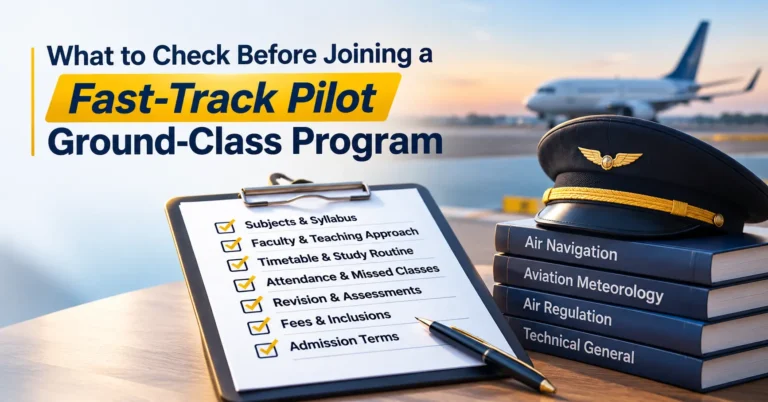
By Shravya, Aviate Aero Academy
Choosing a pilot ground-class programme is an early test of decision-making. The course needs to fit your career plans, but it also needs to fit your daily routine, learning pace and family budget.
A shorter programme can appeal to students eager to begin flying training and working professionals planning a career change. For parents, the concern is often different: will a concentrated schedule give their child enough time to understand demanding subjects?
Both perspectives deserve attention. A fast-track programme makes sense when its teaching schedule, student support and study expectations work together.
Using Aviate Aero Academy’s two-month Super Fast Track Batch (SFB) as an example, here are the details to examine before enrolling.
1. Ask Exactly Which Subjects Are Included
Start with the syllabus rather than the advertised duration.
Pilot theoretical preparation involves areas such as Air Navigation, Aviation Meteorology, Air Regulation and technical knowledge. However, students should not assume that every ground-class package includes every subject or the same teaching hours.
Request the subject list specifically applicable to Aviate’s SFB batch. Ask how much time is allocated to each subject, which learning materials are provided and whether any preparation requires separate enrolment.
The two-month duration covers ground classes. It does not represent the time required to complete a Commercial Pilot Licence.
Keeping that distinction clear helps students plan the stages that follow.Students can also refer to our pilot training checklist to understand the wider preparation and licensing steps involved in their aviation journey.
2. Understand the Faculty’s Teaching Approach
An instructor’s aviation experience matters. So does their ability to help a beginner understand an unfamiliar concept.
Navigation calculations, weather interpretation and aircraft principles require explanation, practice and feedback. Students need to feel comfortable asking questions, especially when the class moves quickly.
Before joining Aviate Aero Academy’s DGCA ground classes, ask who will teach each subject and how students can raise doubts. Where available, request a faculty interaction or demonstration session.
The useful question is practical: when you struggle with a topic, how will the instructor help you work through it?
3. Review the Timetable Against Your Actual Routine
A two-month programme may be manageable on paper and demanding in practice.
Ask for the confirmed start date, teaching days, daily timings, delivery format and any assessments outside regular sessions. Then add commuting, meals, rest and independent study to your calendar.
College students should check for examination clashes. Working aspirants should consider whether office responsibilities leave enough time and concentration for revision.
For students comparing DGCA ground classes in Hyderabad, travel time can also influence attendance and study consistency.
Choose a schedule you can sustain throughout the programme.
4. Check Attendance and Missed-Class Rules
In a concentrated batch, an absence can affect more than one day’s learning. Later lessons may build on concepts introduced while you were away.
Clarify attendance expectations before admission. Ask what happens after illness, an unavoidable work commitment or another missed session.
Are replacement classes available? Are recordings provided? Does additional instruction involve a charge?
These facilities should be confirmed rather than assumed. Understanding the policy early helps students take responsibility for keeping pace.
5. Find Out How Revision and Assessment Work
Finishing the syllabus is one milestone. Being able to recall, explain and apply it is another.
Ask whether Aviate’s SFB timetable includes topic tests, revision sessions and mock examinations. Establish how feedback is shared and what support is available when a student repeatedly struggles.
For DGCA exam preparation, practice should reveal gaps in understanding—not simply produce a score.Students should also consult the official DGCA Flight Crew examination FAQs for registration requirements, examination fees and related procedures.
Students should also ask how much self-study is expected each day. Classroom instruction becomes more useful when followed by consistent revision.
6. Get an Itemised Fee Breakdown
Aviate’s two-month SFB offer is ₹1,20,000, with an offer deadline of 14 November 2026.
Before paying, request written confirmation of tuition inclusions, learning materials, assessments, revision support and applicable taxes. Check whether additional classes or extended access carry separate charges.
Families should also build a wider commercial pilot training budget. Medical assessments, examinations, flying training, travel and accommodation may involve separate expenses.
Do not interpret a ground-class fee as the total cost of becoming a pilot.For a broader financial overview, read our guide to the cost of pilot training in India
7. Read the Admission Terms Carefully
Review eligibility, required documents, payment schedules, refund rules and batch-transfer conditions. Ask what happens if either the student or academy needs to change the planned start date.
Confirm what action must be completed before the offer deadline to secure the advertised fee.
Aviation career planning requires ambition, but it also requires careful preparation. Industry opportunities do not replace the need for knowledge, medical suitability, licensing and individual competence.
Request Aviate’s batch details to review the subjects, faculty, timetable, attendance policy, revision support, fees and admission terms—and decide whether the two-month SFB format fits your next step.