Is 2026 the Right Time to Start Pilot Training in India? Aviation Boom Explained
If you have been researching a pilot career in India and waiting for the right moment to commit — 2026 is not the year to keep waiting. The Indian aviation industry is in the middle of a structural expansion that has not been seen in this country before. Airlines are adding aircraft at a pace that outstrips the supply of qualified pilots, new airports are opening under the UDAN scheme, and industry bodies are projecting a pilot shortfall that will stretch well into the next decade.
This is not marketing language. These are numbers — from Boeing, CAPA India, and the airlines themselves. This article lays out exactly what is driving the current aviation boom, what it means for a student starting pilot training today, and why the timing of your decision matters more than most people realise.
The Numbers Behind the Aviation Boom
Every major data source tracking Indian aviation points in the same direction. Here is what the current picture actually looks like.
| Data Point | Figure | Source |
|---|---|---|
| New pilots India needs by 2030 | 10,000+ | CAPA India |
| Global pilot shortage projected for 2026 | 24,000+ | Oliver Wyman Aviation |
| New pilots Boeing projects globally over 20 years | 660,000 | Boeing Pilot Outlook 2024–2043 |
| IndiGo + Air India combined pilot requirement | 16,000+ (coming years) | Ministry of Civil Aviation |
| India domestic air travel growth (last year) | 17% year-on-year | DGCA Traffic Data |
| Aircraft on order — Indian carriers combined | 1,700+ | IndiGo, Air India & Akasa Orders |
| India's aviation market rank globally | 3rd Largest (2024) | IATA |
These are not projections built on optimism. IndiGo alone has placed orders for over 500 aircraft. Air India, under Tata Group ownership, has ordered a combined 470 aircraft from Airbus and Boeing — the largest single airline order in aviation history at the time it was placed. Every one of those aircraft needs a minimum of 12–16 trained pilots to operate on a daily rotation. The arithmetic makes the pilot shortage self-evident.
Why the Pilot Shortage Is Structural — Not Temporary
Aviation shortages come in two types: cyclical, caused by temporary downturns and recoveries, and structural, caused by a fundamental mismatch between training pipeline capacity and industry demand. India’s current pilot shortage is structural. Three forces are driving it simultaneously and none of them are reversing.
- Fleet expansion outpacing training supply: Indian airlines are inducting aircraft faster than the DGCA-approved training pipeline can produce qualified pilots. The gap widens every quarter as new deliveries arrive and the pilot supply stays relatively flat.
- Senior pilot retirements: A significant cohort of captains who entered Indian aviation in the 1990s and 2000s are reaching the mandatory retirement age of 65. Their seats need to be filled — by First Officers already in the system, which in turn opens First Officer positions for freshly licensed CPL holders.
- New DGCA FDTL fatigue rules: The updated Flight Duty Time Limitation rules introduced stricter rest periods for pilots. Airlines now need more pilots to cover the same number of flights. The same fleet requires a larger pilot workforce under the new regulations.
- UDAN scheme regional expansion: The government’s UDAN scheme is connecting Tier 2 and Tier 3 cities with air service for the first time. New routes require new crews. Regional carriers under UDAN are actively recruiting and offer genuine entry-level employment opportunities for fresh CPL holders.
What the Airlines Are Actually Hiring For Right Now
Understanding which airlines are hiring and what they require helps aspirants plan backward from their career goal to their training timeline.
| Airline | Aircraft | Hiring Profile in 2026 | Type Rating Required |
|---|---|---|---|
| IndiGo | Airbus A320 / A321neo | Junior First Officers, CPL holders with 250+ flight hours | A320 preferred; non-type rated candidates also considered |
| Air India | Airbus A320 Family & Wide-body Fleet | First Officers and experienced pilots | A320, Boeing 777, or Boeing 787 (depending on fleet) |
| Akasa Air | Boeing 737 MAX | First Officers under the Family Fly Programme | B737 type rating preferred |
| Alliance Air / Regional Airlines | ATR 72 | Fresh CPL holders with 200+ flight hours | ATR type rating or self-funded training |
| Cargo Operators | Various Aircraft | Increasing demand driven by e-commerce growth | Varies by operator |
IndiGo’s 2026 recruitment cycle — with selection exams held across Delhi NCR, Mumbai, and Bengaluru — accepts applications from CPL holders both with and without the A320 Type Rating. This is significant. It means freshly licensed pilots are eligible to apply directly, with Type Rating either funded by IndiGo or completed independently before joining.
Why the Timing of Your Decision Matters
A student who starts pilot training in 2026 — assuming a standard timeline of 12–18 months for DGCA ground classes and exams, followed by 18–30 months for flying training — enters the job market between 2028 and 2030. That window aligns precisely with the peak of India’s aircraft induction cycle, when demand for qualified First Officers is projected to be at its highest.
A student who delays that decision by two years starts the same journey in 2028 and exits training in 2030–2032 — arriving at the market after the initial wave of high-demand recruitment has been filled by those who started earlier. The aviation career is not a market where late entry catches up easily. Seniority — time in the left seat, hours on type, upgrade eligibility — is everything. Two years of delayed start means two years further behind on every seniority list.
What Starting in 2026 Actually Requires
The window is open. What does walking through it actually require from a student starting today?
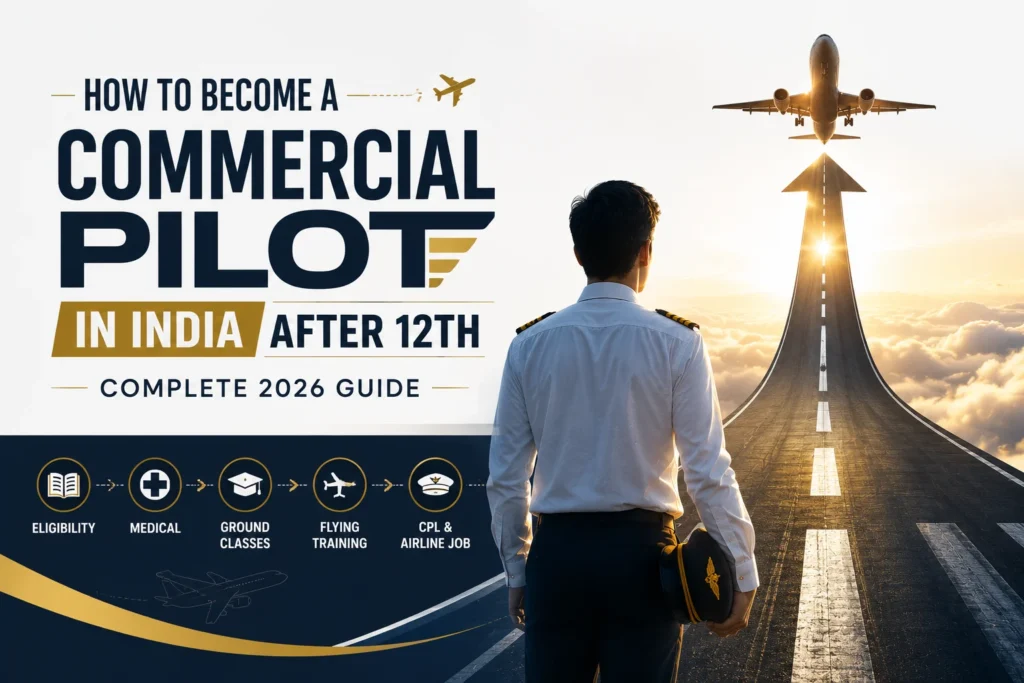
- Academic eligibility: 12th standard with Physics and Mathematics, minimum 50% in both subjects. No engineering degree or additional qualification required.
- Medical fitness: DGCA Class 2 Medical before SPL application, Class 1 before CPL. Get your medical checked before committing to training expenditure — it is the only eligibility gate that cannot be prepared for.
- DGCA eCAAT registration: All pilot licensing in India runs through the DGCA eCAAT portal at ecarb.dgca.gov.in. Registration takes 2–4 weeks and must come before exam booking.
- Financial planning: Total investment from 12th to airline-ready pilot — including CPL training, DGCA preparation, and Type Rating — ranges from ₹50 lakhs to ₹95 lakhs depending on training country and route. Education loans through SBI and HDFC Credila are available for DGCA-approved and internationally accredited schools.
- Guidance: The students who navigate this journey most efficiently are those who receive accurate, structured career guidance from the beginning — not halfway through when course corrections are expensive.
The Honest Answer — Yes. But Only If You Start Right.
2026 is not just a good year to start pilot training in India. It is arguably the best window in the history of Indian commercial aviation to begin this journey. The demand is structural and long-term. The airlines are hiring at scale. The UDAN scheme is creating regional entry points that did not exist five years ago. And the students who begin preparation now will graduate into a job market that is actively searching for them.
The caveat is preparation quality. A pilot shortfall does not mean airlines lower their standards — it means more seats for qualified candidates. DGCA exam first-attempt success, solid flying training at a recognised institution, and structured guidance from eligibility to airline placement are what separate the candidates who get hired quickly from those who spend months on waitlists.
At Aviate Aero Academy in Hyderabad, we have been guiding aspiring pilots through this exact journey for over a decade — through market cycles, DGCA changes, and the aviation expansion that is now creating the opportunity in front of you. If 2026 is the year you decide to start, the first conversation is free.
Book Your Free Aviation Career Counselling Session — aviateaeroacademy.com/contact-us | +91 62816 37703